
Category: Media
Che Guevara

Park Inspector

Tibetan Book of the Dead

It’s dying to take you away..turn off your minds, relax and float down stream maybe quintessential Beatles or trippy mantra but some of these words connect to an ancient text via Timothy Leary’s The Psychedelic Experience.
But it was Aldous Huxley who introduced the Tibetan Book of the Dead to Leary via Walter Evans-Wentz’s translation of the Bado Thodol (1927, Oxford University Press). Evans-Wentz chose the title because of parallels he saw in the Egyptian book of The Dead.
The intention of the the text is to guide one through the experiences of consciousness after death and intermediary stages between death and rebirth. These transitional stages are known as Bardos. The text also includes rituals to undertake for the dead or dying.
The 3 Bardos are, 1) the Chikhai Bardo or Bardo of the moment of death or the clear light reality, 2) the Chonyid Bardo or Bardo of the experiencing of reality or the experience of visions of various Buddha forms and 3) the Sidpa Bardo or Bardo of rebirth hallucinations leading to rebirth and karmically impelled hallucinations.
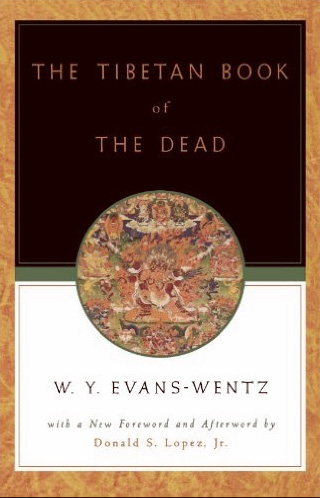
According to Leary, the Tibetan Book of The Dead is a key to the innermost recesses of the human mind and a guide for initiates and for those who are seeking the spiritual path of liberation.
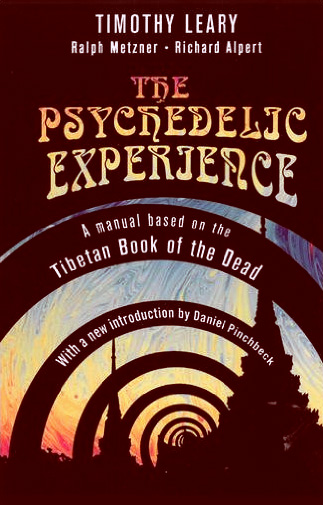
The Psychedelic Experience (1964, University Books) attempts to explain the symbolic nature of the hallucinatory experience when taking LSD. It’s not surprising those who’ve taken the drug describe experiences of intense white light & letting go of the ego, hallucinations of a karmic nature and another stage liken to rebirth or re-entry.
Whether or not this is the same as the inner journey as outlined in the Tibetan Book of the Dead is debatable.
John Lennon wrote Tomorrow Never Knows (1966) having read The Psychedelic Experience but felt LSD only exacerbated his personal problems. Other initiates weren’t so lucky stranded in permanent psychosis, the casualties of a drug phenomenon.

