Category: nature
Smile
Praying Mantis
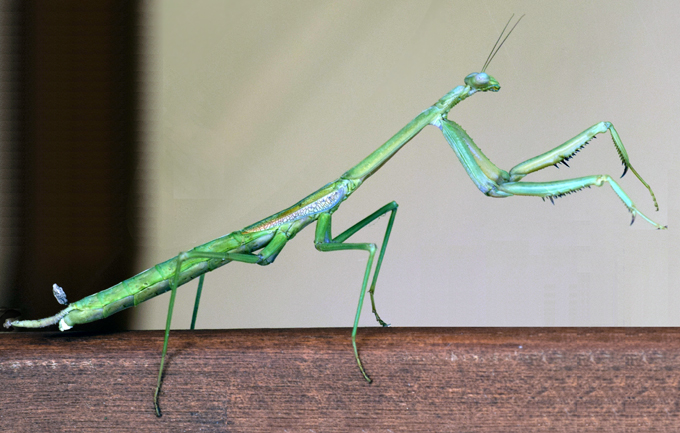
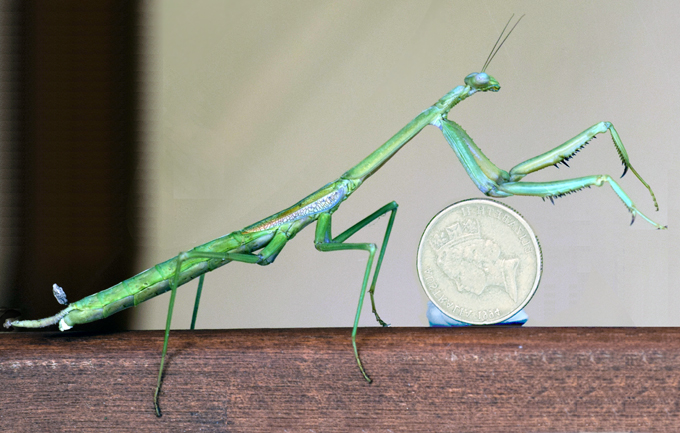
Help! A giant egg laying creepy crawly with a swivelling alien head and human-like upper body that cannibalises its mate. This is the stuff of science fiction. Maybe it’s the inspiration for horror movies (think Alien for example). Perhaps this earthling really is the the source of our greatest fears and nightmares having been around for at least 135 million years.
Two enormous eyes atop a triangular swivelling head enable the Praying Mantis to see stereoscopically and detect movement as far as 60 feet away.
https://en.wikipedia.org/wiki/Mantis#/media/File:Large_brown_mantid_close_up_nohair.jpg
It catches its prey with two oversized raptorial front legs. The name ‘praying’ refers to the folded forelimbs as it waits motionless, ready to snatch insects and even small vertebrates such as lizards and frogs. Death occurs with a paralysing neck bite while the female Mantis decapitates the male and cannibalises it during mating so as to provide nutrients for the eggs. Some Mantis species do not ambush their prey when stationary but instead scamper along the ground to hunt.
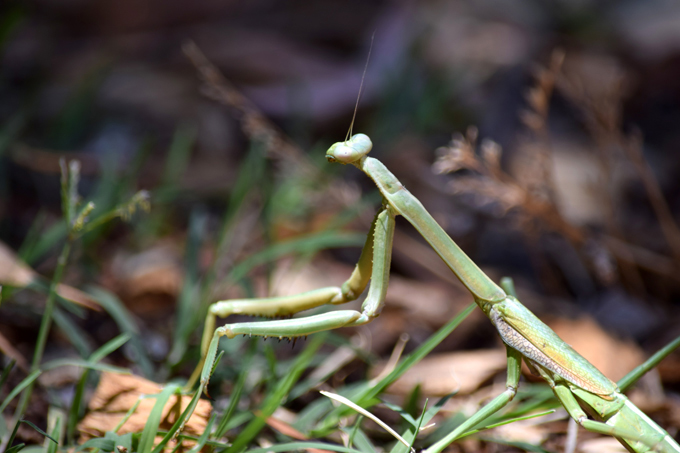
Camouflage gives it ultimate advantage. Perched on a branch it merges undetected with its twig like anatomy and vegetative colouring. What’s ‘preying’ in the grass you ask? (see pic). The Mantis gently sways from side to side as it propels itself forward mimicking twigs and branches as they sway in the breeze. Males are capable of flying (see wing anatomy, main pic) and have developed aerobatic manoeuvres avoiding predators such as bats and have auditory senses to hear echo-locating calls.
So remember, if you have sleepless nights and are spooked by alien looking creatures that creep around and fly in the dark, be reassured they couldn’t possibly be the Praying Mantis..
Interview with Bronwen Cribb
I’ve known Bronwen for as long as I can remember. While I rarely saw her she seemed ever present – the unique mix of the familiar with unfamiliar that accompanies a relative close in age and family traits.
We grew up in very different places; me, in a rather repressed Protestant backwater; she, in a utopian paradise where the cowboys reign and the rivers run free (or so it seemed back then).
Recently we’ve had long conversations regarding the mysterious relationship between mind & spirit and it is timely she’s currently investigating the fascinating subject of science & the mind in an anticipated opus.
Do you have a stand out memory from your childhood?
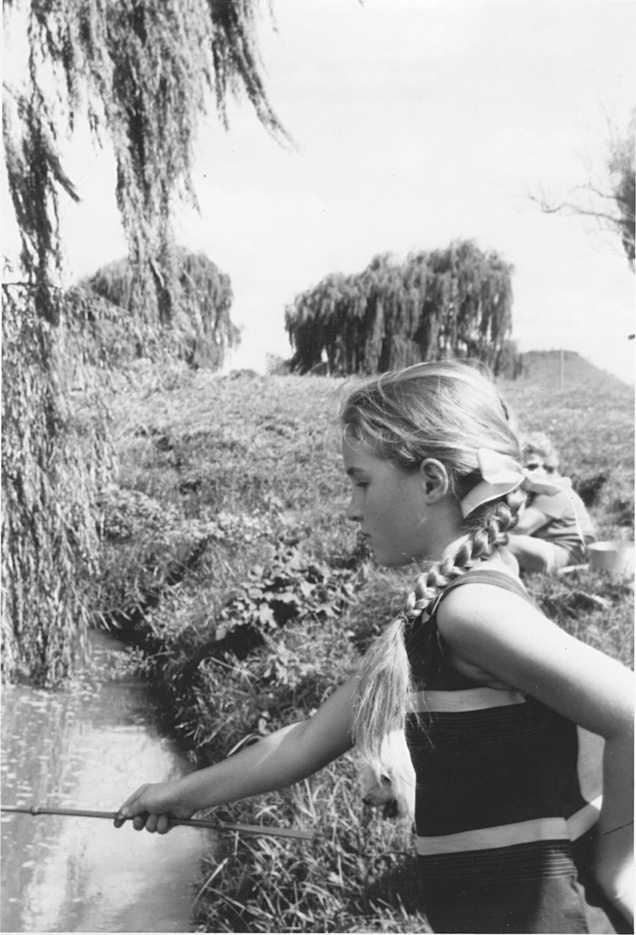
The sound of magpies voices coming through the window, running across a plowed field, full of clumps of black earth, and the musky smell of native peppercorn trees in the summer heat. These are the sensory memories of my childhood, and also my earliest memories. My focus was always on nature.
What was your earliest childhood memory?
So many memories get rewritten by discussion. Parents usually say, “Do you remember when…” until we think we remember it ourselves, but in reality it is a transplanted reality. So I can’t really be sure what my earliest memory was. Perhaps body-centered memories are easiest to recall, and validate as our own. So I would have to say my earliest memory is the time I was crawling around on all fours under a bed. As a toddler I was naked most of the time, except for a nappy. I caught my bare back against a loose-ended wire spring. I can still recall the sharp, almost itch scrape. As I came out from underneath my mother made a fuss presumably because of blood. It never really hurt but I have the long white scar on my back to this day.
What did your parents do? How did they influence you (in any special way in life)?
My father was a rebel who tried his hand at many career choices before settling on becoming a lecturer in managerial accounting. He had been reared for a good while by his uncle who was a plumber. I suspect this had started his interest in do-it-yourself home handy-man activities. Although he was never one to settle for small. I will forever be grateful for this because he taught me, often learning himself at the time, so many skills. We laid flooring, built a swimming pool, stacked and laid bricks, and inside, learnt to bake bread from scratch and how to bone out a carcass and filet a fish. I took it for granted that these were abilities everyone had access to, without realizing how important they were in confidence building. Instead of saying “I can’t” this approach taught me that anything is possible.
My mother lived to support my father and care for the family. She was inherently creative and with that came imagination. Instead of down-to-earth talks she led us on flights of fancy, and nothing excited her more than a dinner party or a house extension. She taught me the importance of an open mind.
Is there a stand out moment in your life you can recall or special moment that changed your life?
Probably the time that I almost died from a bee sting is the day that changed my life most profoundly. Slowly my reaction to stings had grown worse and worse over the years. I tried to avoid being around honeybees but this was a difficult ask since I loved to be outside. One day, down the street on a spare block, neighbourhood kids were gathering to watch a hive being robbed, and I could not miss out on that!
Even though we kept out distance, inevitably I was the one standing next to the kid who started swatting at a disoriented bee. The sting that landed on me, right in the middle of my forehead, started up a reaction by the time I had run home. Heat was rising. Although I felt like I was still the same person inside, my body had decided it belonged to someone else. It was the incredibly rapid heartbeat that was the most odd, and debilitating. At first I felt a panic rising. This might be the end and at that moment I really didn’t want to die. It felt unfair that my body could just up and do something like this to me. I remember being rushed to medical help; carried through to the local doctor’s surgery, past waiting clients. And then it blanks out. I was out cold for half an hour. When I did come around my vision was strange. The doctors face was close to mine and I remember his nose looking unusually large – distorted – as if viewed through lens with a barrel distortion.
That experience was the first time I became acutely aware of the duality of existence – an inner sense of self as steady as a rock, while my body was busy doing all kinds of crazy things. The ‘me’ inside was just the same and not changed at all. I learnt how to detach. It cured me of a fear of death, because in what felt like an eon waiting for my body to give out, I found I had freed my real self of the need for that body.
Is there someone who especially influenced you in any way?
So many people have influenced me in special ways but no one person has changed the course of my life. Although the death of my partner catalyzed a need to break from my academic career. When things like that happen I think we all look around for patterns and meaning in our lives. I wanted to throw myself into writing full-time, and the means to do that appeared.
Have you lived outside of your present city or country? What were the circumstances?
Apart from visits to various places, I have lived in the UK, and worked there. It was only for a year but provided a wonderful contrast to Australia. It helped me realize what a fantastic country Australia is, with its wide blue skies and hot summers.
What is your favourite food or cuisine?
I would have to say Chinese cuisine.
Who is your favourite celebrity (past or present) & why?
I don’t really connect to celebrity as a concept. It is birthed through image and privilege, or just raw luck. But those prepared to stand against the flow, with logic, hard work and morals, I do find inspiring. Steven M. Greer is one example currently active in the media.
Who is your favourite musician & why?
I don’t have a single favourite, it all depends on my temperament at the time.
Who is the person you’d most want to have a conversation over dinner with (anyone for any reason)?
Tesla – the unexplored hero of physics.
If you could only take a handful of records (music) to a desert island, what would they be?
More than likely I would take podcasts – conversations by today’s great minds on a range of topics – rather than music. I can always sing for myself.
If you could bring just one or two books to a desert island, what would they be?
Something practical – like ‘No Mercy: True Stories of Disaster, Survival and Brutality’
A good science fiction book – like ‘Helix’ by J.L. Bryan
What book are you reading at the moment (fiction or non fiction)?
Non-fiction: ‘The Memory Code’ by Lynne Kelly
Fiction: ‘Precious Gifts’ by Danielle Steel
What is your secret vice (anything, drink type, chocolate etc)?
I do like chocolate
Favourite word or saying?
Probably!
How do you relax or spend your time when not working?
Meditating or in the garden looking after plants
Is there something you have done you are most proud of?
Pride has a quality of judgment so I try to steer clear of it. If I attach pride to life’s experiences I will also feel compelled to apportion failure to various endeavors. The family motto ‘I try’ is more apt.
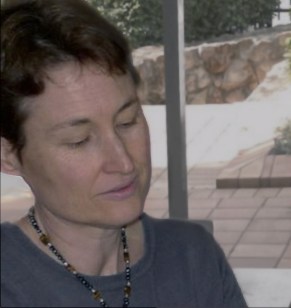
Dr Bronwen Cribb is a scientist and is writing a book uncovering ground breaking research on the nature of the mind.
 scribblesdotbiz
