I first encountered Leonard Cohen in the ’80s during the music television experience and ‘I’m Your Man’ seemed to morph between melody and Cohen’s iconic face. But memory isn’t always reliable. Sometimes it tricks on recall and still the impression remains vivid.
Years later an interest in poetry led to a second and more reliable encounter. My appreciation felt like a kind of binary experience where I took to the lyrics & then the changes. Or was it the melody before the words? Anyhow, it had little to do with me but rather having been drawn toward the beguiling personality as much as the verse. His career as singer, writer and his mainstream & commercial success defy conventional wisdom as he magically redefines the role of contemporary poet. What appears as a natural, almost organic public output is surely an implausible balancing act for others and his poems’ most private thoughts seem impervious to commercial exposure. Then there’s the phenomena where songs are so celebrated they take on a life of their own and become universal standards. Hallelujah’s multi verse complexity is counter balanced with its perfectly weighted hymnal changes speaking across generations. But to me it’s the private experience that’s the thing, something like finding a guitar in the back of the cupboard with a songbook in the case – and invariably it’s Dylan or..Leonard Cohen.
Two identical women are seated in ritual costume against a stormy sky with superimposed, interconnected hearts while holding hands. Their faces impassive serene and yet resigned.
Painted when Frida Kahlo was divorced from Diego Rivera she is depicted as two conflicting yet connected portraits of her persona. She grasps her hands and where, on the right she clasps a locket of Rivera and shows her exposed heart intact, on the left her heart is dissected and she holds macabre surgical scissors. The left image is the Kahlo that is rejected.
Diego on my Mind (1940)
A looming portrait with a tattooed face seems to push beyond its frame with tendril like petals in a halo. A delicate vale flows downward in a sweep of satin upon an organic background suggesting eternal nature.
Kahlo is painted in traditional Mexican Tehuana costume and she has just married Rivera. Streaming, living tendrils branch outward in all directions representing sprouting organic life and renewed love. An indelible tattoo of Rivera on her forehead symbolises his permanency.
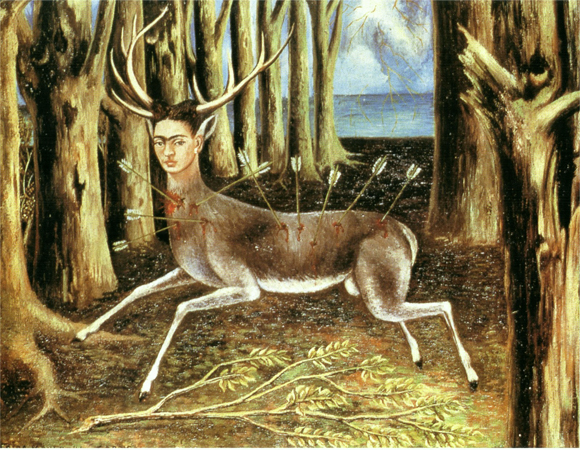
The Little Deer (1946)
A bounding deer in a woodland clearing seems strangely foreboding and ever so vulnerable. It has a human head and the pierced abdomen with bloodied arrows makes reference to Saint Sebastian. The soft earth green of the wooded Eden and distant sky are abruptly truncated with nightmarish trees.
The Aztec symbol for the human right foot is the deer and Kahlo’s has been injured by a terrible bus accident and also polio. During the period of this painting she became interested in mysticism and Eastern religion. The arrows represent her ongoing suffering from her problematic relationship and physical injuries.
So which interpretations is correct – the dark text or the light text? Kahlo’s unique symbolism and personal life story reveal thelight text interpretation to be closest to the truth.
In 1925, Frida Kahlo had a near fatal traffic accident when her school bus collided with a street car. An iron hand rail impaled her through the pelvis fracturing ribs, collarbone and displacing three vertebrae. She was to sustain illness and pain related to this accident for the rest of her life. Months in hospital and recuperation led to her taking up painting while bedridden.
She quickly developed artistically and realised her aptitude for art enabled her to directly explore and express her life experiences. Much of the symbology in her paintings reference her physical and emotional pain brought on by the traffic accident.
She joined the Mexican Communist Party in the late 1920’s in her slow recovery ending her confinement and she began to mingle with political activists and artists.
The next critical phase in her life occurred on meeting Diego Rivera when she approached him to assess her work. This fateful meeting would lead to their marriage and life-long artistic bond. But he was a womaniser and the pain and anguish is again evident in the paintings.
In the late 1920’s a fascination in Mexican folk art including pre columbian art with its flattened perspective and unique colouring began to influence her art and she was to adopt the wearing of traditional costume and jewellery.
Like other historically famous figures in art she was to be posthumously recognised decades later & not in her lifetime. She is now firmly established in the pantheon of international art.
Well just about, in fact “..within a hair’s breadth of death”. Chet Bakers’s public admission in Today magazine of 1963 was a no-holes-barred confession that would seem to reflect a complete disregard for his life and personal reputation.
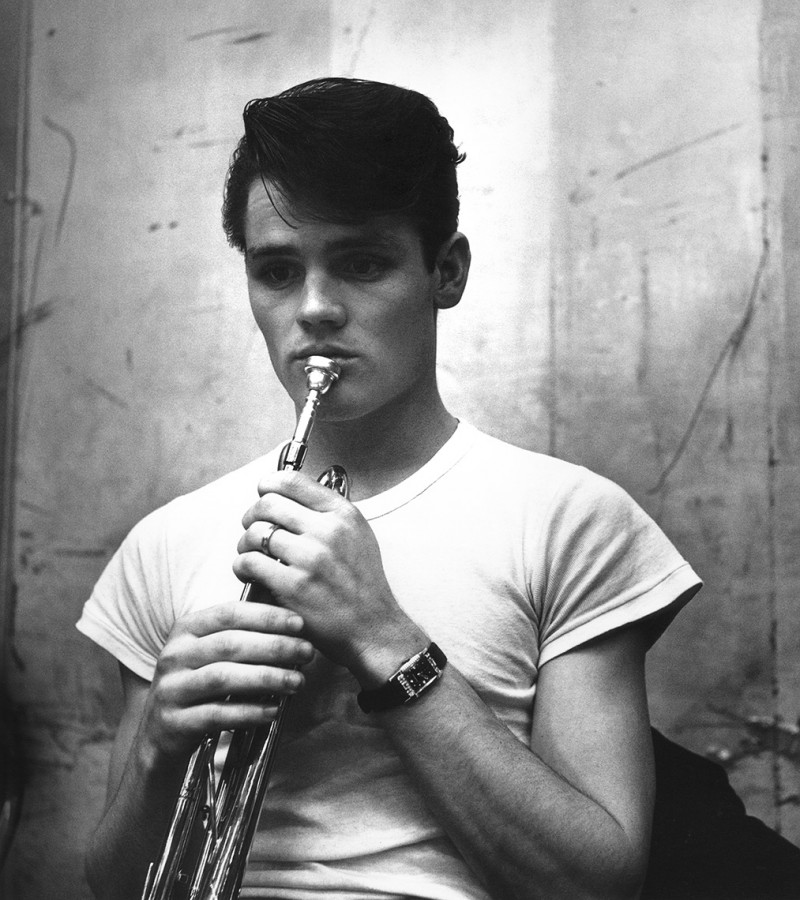
Chet Baker by William Claxton
From being the fastest rising jazzman in the business, I have become the world’s best known junkie. Police, medical authorities, the customs men of a dozen countries, the F.B.I. and the British Home Office..all keep a close eye on me..I have pumped enough dope into me to kill a quarter of a million normal people..I am nauseated and appalled by my drug madness. I loath myself for my addiction. It is sheer lunacy.. etc.
But strangely, after going public in this way, he just seemed to gain notoriety. Infamy could best describe him not withstanding film star looks – vividly described by the photographer Claxton.
How good was the so called ‘James Dean of jazz’ ? Certainly good enough for Charlie Parker to seek him out for his quintet in May, 1952 & to quote him: “You better look out there’s a little white cat on the coast who’s gonna eat you up” (Or was it really the dope connection?)
But it wasn’t just his looks, as Parker’s Whitlock (subbing band member) confides: “I remember him (Parker) being absolutely dazzled by his ear”. A similar account in regards to his bravura playing from Art Blakey at the Bryant with Thelonious Monk: “I didn’t know this motherf@#0* could play like this”.
West coast cool, the sound of Gerry Mulligan’s Quartet, Pacific Jazz label and community of musicians are an inherent part of Baker’s formative career; his was the sound of Southern California, the sun & the beach. But somehow the persona and the music seem remote as ever.
And he is capable of heart breaking lyricism:
Maybe his real fame lay in the combination of these attributes: his boyish looks, the bored, cool exterior – as much the effect of addiction – along with the androgynous singing voice.
It is not surprising he continues to be the subject of movies and productions: the Jeckel and Hyde persona, the erratic behaviour, the raw talent, his seemingly effortless performances and see-sawing personal life and fortune including film appearances. And a noteworthy laissez-faire remark on meeting Mussolini’s musician son, Romano: “Gee, It’s a drag about your old man” (!)
Finally, a recent comment on Almost Blue YouTube feed befitting his legacy:
‘We should send Chet discography into space just to let the whole universe know that we are capable of something beautiful after all’ Francesco
My first encounter with Robert Lloyd the musician happened by chance when I stumbled upon a live performance at the Adelaide Festival Centre way back when. I was struck by the vitality and high energy music; his ensemble left a resonance with the listener hitherto unknown to me.
Back then the term ‘World Music’ didn’t exist and he definitely pre-dated the notion. At the time the concept of a life long friendship with Robert would have seemed fanciful but it’s given me the chance to see the morphing and changes in his musical styles and approaches; he is now a writer & composer, a singer and poet.
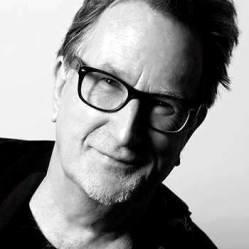
Portrait by Vanessa Allen
Do you have a stand out memory from your childhood?
Yes, Mum and Dad dancing to Glen Miller around the lounge room
What was your earliest childhood memory?
Lynn, my sister and I sitting on our front porch waiting for our newly born brother, Peter to come home from hospital. I was 6 years
What did your parents do? How did they influence you (in any special way in life)?
Mum was a Telephonist & I learned the value of speech and communication from her. Dad was an Aquarian and did many things from a furniture salesman to a cabby. He was a very good looking guy and a gentleman. He got on well with women!
Is there a stand out moment in your life you can recall or special moment that changed your life?
I’ve had a few but perhaps when mum let me sit and watch a 11.30pm TV program called ‘The Jazz Scene U.S.A.’ to watch The John Coltrane Quartet
Is there someone who especially influenced you in any way?
Miles Davis – in every way because he kept growing and changing musically. This is what turns me on
Have you lived outside of your present city or country? What were the circumstances?
Yes, a number of places. Bali was a big influence because of Gamelan music and Paris because of Debussy, Ravel, Satie and Darius Milhaud
What is your favourite food or cuisine?
Mediterranean cuisine such as Spanish and Greek food. I like their combination of meat with salad & less grain and also the combination of food with music
Who is your favourite celebrity (past or present) & why?
Can’t think of any off hand – Yes, Charlie Chaplin
Who is your favourite musician & why?
My favourite musician is Miles Davis. He was a Gemini like me. He constantly evolved as a musician. The documentary ‘Ballad Of a Changing Man’ reveals how I musically evolved as well
Who is the person you’d most want to have a conversation over dinner with (anyone for any reason)?
Frank Lloyd Wright because of his creative genius and ability to continue designing against public opinion. Also Leonard Cohen for many musical reasons but also for fabulous conversation. He is an interface between Judaism and his song writing
If you could only take a handful of records (music) to a desert island, what would they be?
Kind of Blue, Songs of Leonard Cohen, Ravel’s Piano Concerto in G Major – especially Martha Argerich’s performance, Pet Sounds, Arvo Pärt’s Tabula Rasa
If you could bring just one or two books to a desert island, what would they be?
The Power of Now by Eckhart Tolle. There are so many books. The Old Testament. The Poetry of Dylan Thomas
What book are you reading at the moment?
The Blue Moment: Miles Davis’s Kind of Blue and the Remaking of Modern Music by Richard Williams
What is your secret vice (anything, drink type, chocolate etc)?
It’s a secret!
Favourite word or saying?
Timing is everything – mine
How do you relax or spend your time when not working?
Yoga and reading
Is there something you have done you are most proud of?
Performing ‘Feral’ in Cleveland. Also ‘Nullarbor’ at the Joyce Theater in NYC
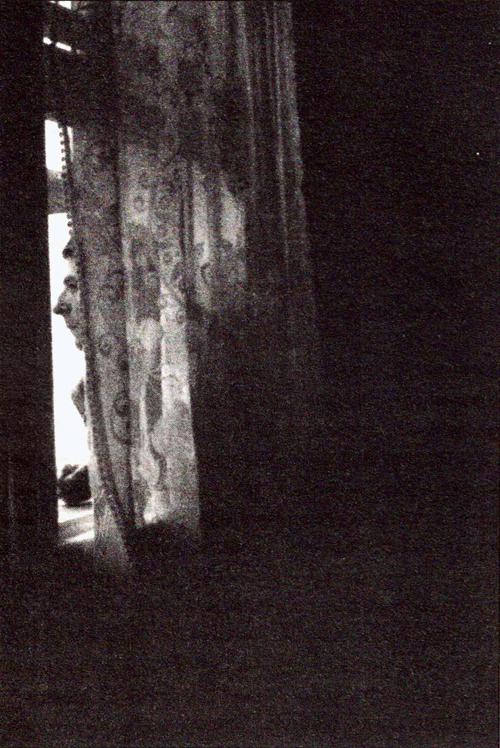 Portrait by Hazel Field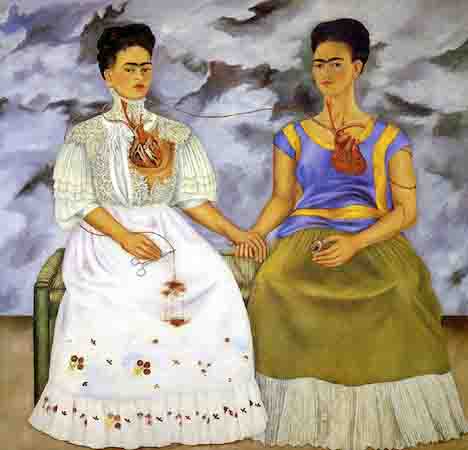

 scribblesdotbiz