Frida Kahlo

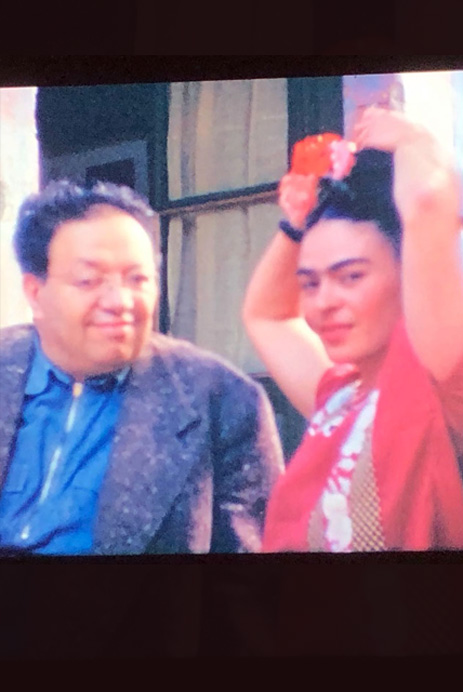
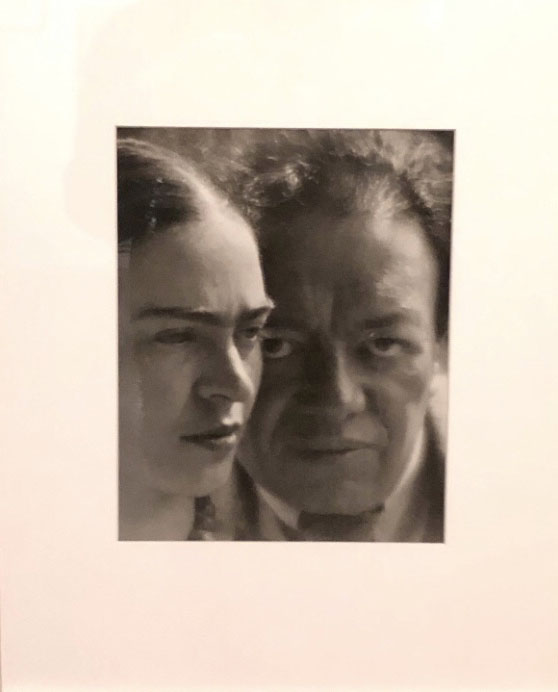
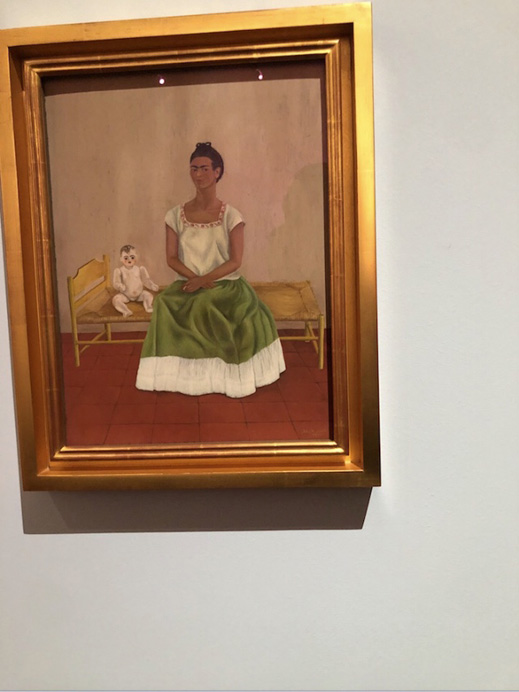
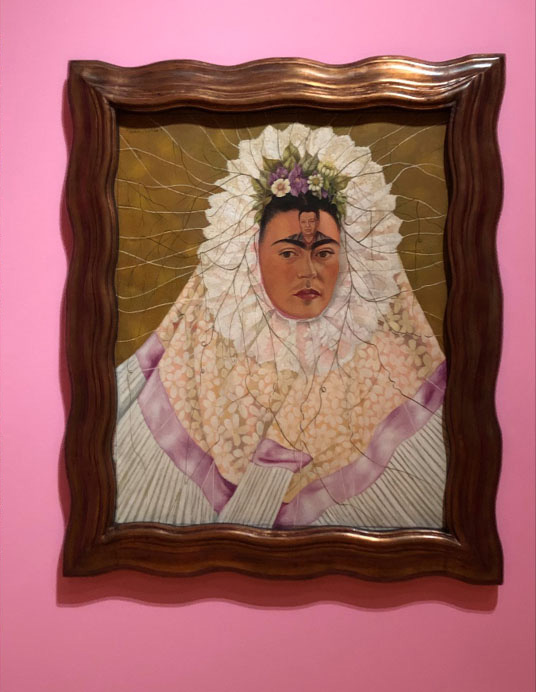
I have never seen a Frida Kahlo painting until I had the opportunity to attend the Frida & Diego: Love & Revolution exhibition at the AGSA. There are roughly 150 works from the Jacques and Natasha Gelman Collection showcasing some of Frida’s most iconic works. The show is especially successful because her work hangs side by side with Diego Rivera’s and affords the chance to be seen in the broader context of the Mexican Modernist movement. I will focus primarily on Frida’s work for the sake of this discussion. 

Psychopath

One percent of the population is a Psychopath. This percentage doubles or quadruples in high power positions such as lawyers, business leaders or surgeons. Because it is a spectrum disorder it can vary considerably from one individual to the next. But how do you identify a Psychopath?

Psychopathy has qualities of the two other personality types in ‘the dark triad’. Machiavellianism and Narcissism together with Psychopathy make up the triad.

One of the key shared conditions amongst all three personality types is a lack of empathy. There is also the absence of remorse and of guilt. If they pity it is for those who show kindness or compassion. To them, such feelings are a sign of weakness. 

Another Psychopathy trait is low impulse control and can see them engage in violent and risky behavior. Extreme situations may occur where the Psychopath will dispatch or kill someone on impulse. The phrase ‘act now, think later’ is scarily appropriate in regards the Psychopathy personality.

Psychopathy can be seen as having two separate models. There exists a primary or factor one type and a secondary, factor two type. ‘Act now and think later’ describes the impulsive inclination tied up with factor two Psychopathy. The manipulation, power jostling character of psychopaths describes primary Psychopathy where calculation and cunning are used against competition.

A lot has been written on Psychopathy and it is popular subject material in fiction and the movies. Hannibal Lecter immediately comes to mind. What is not commonly understood is the nuanced condition of Psychopathy, how it is part of ’the dark triad’ and how certain traits are shared with both Machiavellianism and Narcissism. In short, malevolence may vary from one individual to the next. And because Psychopathy is a spectrum disorder it may not be at all obvious. It could be your friended person on social media, your neighbour down the street or even a member of your family. 

Robert Smith

I’d lost contact with Bob sometime before he had passed away. My friendship with him could be described as close but over the duration of 30 years it inevitably changed. When I first knew him he was embroiled in a legal wrangle with the Flinders University where he had started the Art History Department in the 1960’s. By the time he died he had become a nationally recognized scholar, one of the formative generation of Australian art historians. Personally, I think his greatest knowledge lay in English literature and the Italian Renaissance but his interests were broad. True to art scholarship he was fluent in Italian.

I was a student of his at Flinders University, a raw undergraduate with only moderate ability and motivation. One night he phoned regarding an overdue essay of mine. I was so surprised because I didn’t think it mattered or that he cared. He requested I forward what preparatory notes I had in regards the essay topic. I was touched and this really motivated me to knuckle down and study. I guess this was his intention. But more importantly, it started a life long friendship. His interest and fascination in life was infectious. I couldn’t write until I met Bob who basically taught me from the ground up. He led through example. Simply put, it is the interest in source material that drives the process and with the correct approach, results should follow.

So many years after that fateful night in the early ’80’s I have an extract reflecting Bob’s inimitable style. His request was a simple one: pose a monthly question on anything and he’ll give me an answer. Any opportunity to exercise his far ranging thoughts and interests. He surprised me to the end. I was lucky to have this enduring friendship.

6 Sept 2006

Re: I know why you didn’t ask about the poem

Me

Thanks again for the poetry Bob. Reading Olivier has enlightened me on Picasso’s literary efforts but the quote that gets me is “others talk, I work!” apparently in Souchere Dor 1960.

Yours Steve 

Bob

Hello Steve, Speaking of that poem, I once said to Alan Flashtig* “Say not the struggle nought availeth,” to which he replied “I wasn’t about to.”

The poem has been so widely quoted that its author is often referred to as “Poor Man’s Tennyson.” I always thought Tennyson was !

However curious you might have been, I’m sure you wouldn’t want to use up this month’s one wish from your friendly neighbourhood geni on something so simple to resolve.

So here, out of the kindness of my heart is an attachment with the whole four stanzas, and author’s name.

I recall that during World War Two Winston Churchill was fond of quoting the final line: “But westward, look, the land is bright.” Australian Labor Party Minister for External Affairs at the time, Dr H. V. Evatt, preferred the entire first stanza. But then he was the great champion of the United Nations General Assembly, while Churchill preferred the Security Council, dominated by “the big powers” (especially the “westward” ones). Evatt is the most impressive politician I’ve ever met (and I’ve met quite a few–thankfully not the current crop of police state advocates). Cheers, Bob.

*Colleague at Flinders

Also: https://westerlymag.com.au/vale-robert-smith/

https://amp.smh.com.au/culture/art-and-design/always-learning-was-his-motto-20200601-p54yb0.html