You are unique

Which aspects do you think makes a person unique?

I guess this means in regards to someone’s personality or maybe their appearance or even a combination of both.

There is a certain projection of character each of us conveys to the world that could be described as unique making us appear who we are or different to one another.

Children seem to be able to recognise it in adults at first sight. How is this possible? At the same time, it can be very hard to describe uniqueness in a person. This is the stuff of actors and comedians with their nuanced mimicry and ability to flesh out a person’s character or capture a certain turn of phrase or uncanny smile.

However, if you’re not careful you may find yourself in a hall of mirrors. If you stare long enough in the reflection you can get the wrong idea. ‘I look terrible this morning’ or ‘why do I look so different?’ or ‘mirror, mirror on the wall who is..?’ etc. While others may forever feel doubtful or subject to scrutiny simply because they don’t reflect on themselves.

Leave it up to others I say. Am I unique? No, damn it. I’m not.

What are your thoughts on the concept of living a very long life?

Living a very long life may have its drawbacks. Quality of life is valuable and living a life of quality is desirable. However, living a long and dull life may be less valuable depending on the sort of person you are. If you are of a dull disposition you may enjoy an extended life of pabulum because you have no need for anything else. You will no doubt enjoy limitless blandness without boredom. The sun will rise each day and set so many hours later as you fail to acknowledge anything of interest because by nature, you are dull. You simply are not interested. But this in itself maybe interesting. How could you be so dull as to fail to notice anything? The uniqueness of dullness. On the other hand, you are probably not interesting. No, you are just dull.

Robert Smith

I’d lost contact with Bob sometime before he had passed away. My friendship with him could be described as close but over the duration of 30 years it inevitably changed. When I first knew him he was embroiled in a legal wrangle with the Flinders University where he had started the Art History Department in the 1960’s. By the time he died he had become a nationally recognized scholar, one of the formative generation of Australian art historians. Personally, I think his greatest knowledge lay in English literature and the Italian Renaissance but his interests were broad. True to art scholarship he was fluent in Italian.

I was a student of his at Flinders University, a raw undergraduate with only moderate ability and motivation. One night he phoned regarding an overdue essay of mine. I was so surprised because I didn’t think it mattered or that he cared. He requested I forward what preparatory notes I had in regards the essay topic. I was touched and this really motivated me to knuckle down and study. I guess this was his intention. But more importantly, it started a life long friendship. His interest and fascination in life was infectious. I couldn’t write until I met Bob who basically taught me from the ground up. He led through example. Simply put, it is the interest in source material that drives the process and with the correct approach, results should follow.

So many years after that fateful night in the early ’80’s I have an extract reflecting Bob’s inimitable style. His request was a simple one: pose a monthly question on anything and he’ll give me an answer. Any opportunity to exercise his far ranging thoughts and interests. He surprised me to the end. I was lucky to have this enduring friendship.

6 Sept 2006

Re: I know why you didn’t ask about the poem

Me

Thanks again for the poetry Bob. Reading Olivier has enlightened me on Picasso’s literary efforts but the quote that gets me is “others talk, I work!” apparently in Souchere Dor 1960.

Yours Steve 

Bob

Hello Steve, Speaking of that poem, I once said to Alan Flashtig* “Say not the struggle nought availeth,” to which he replied “I wasn’t about to.”

The poem has been so widely quoted that its author is often referred to as “Poor Man’s Tennyson.” I always thought Tennyson was !

However curious you might have been, I’m sure you wouldn’t want to use up this month’s one wish from your friendly neighbourhood geni on something so simple to resolve.

So here, out of the kindness of my heart is an attachment with the whole four stanzas, and author’s name.

I recall that during World War Two Winston Churchill was fond of quoting the final line: “But westward, look, the land is bright.” Australian Labor Party Minister for External Affairs at the time, Dr H. V. Evatt, preferred the entire first stanza. But then he was the great champion of the United Nations General Assembly, while Churchill preferred the Security Council, dominated by “the big powers” (especially the “westward” ones). Evatt is the most impressive politician I’ve ever met (and I’ve met quite a few–thankfully not the current crop of police state advocates). Cheers, Bob.

*Colleague at Flinders

Also: https://westerlymag.com.au/vale-robert-smith/

https://amp.smh.com.au/culture/art-and-design/always-learning-was-his-motto-20200601-p54yb0.html
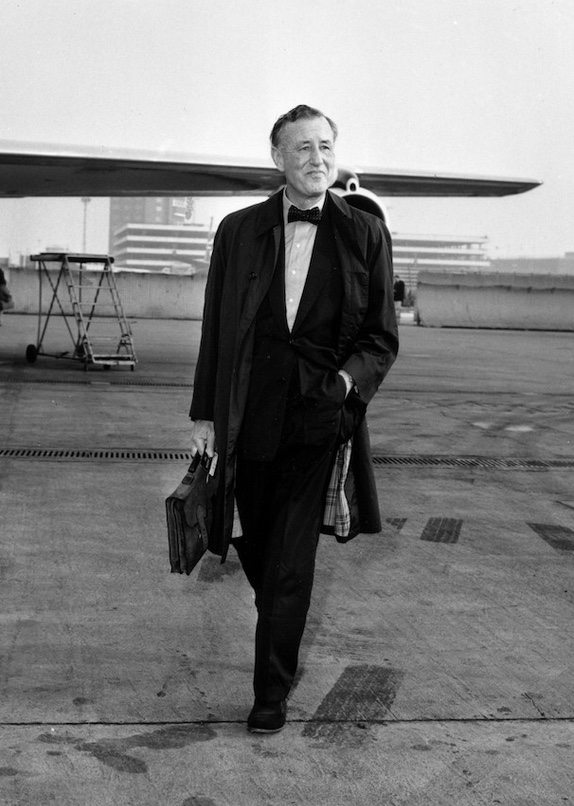
Ian Fleming

For someone with no literary aspirations, ‘if I wait for genius to come, it just doesn’t arrive’ and to confess his Casino Royale as an ‘oafish opus’, how did Ian Fleming manage so much success? Maybe there’s something beneath the self deprecation, behind the throwaway one-liners.
Born into a wealthy family and schooled at Eton, the style and content of his writing contains the world of the privileged. To some degree this is to be expected but it was to be his work as a journalist and in the military with the secret Intelligence during WW 2 where he obtained first hand experience for his thriller spy novels. The central character, James Bond is similar to Fleming’s own character including his penchant for martinis, clothing sense and inability to maintain deep relationships. But the similarities end there as he was plagued with ill-health and taken to addiction. Excessive sedentary living and smoking eighty cigarettes a day inevitably take their toll. What broke his habits must have been the inspiration. Each day while at his retreat in Jamaica, he’d rise for an early morning swim and write two thousand words before lunch. And it must have paid off as he would become the biggest selling crime writer in the US. Even President Kennedy was a fan.
So what was his secret?
It goes without saying, an imagination for creating a set of endearing and memorable characters. A dastardly villain with particularly obnoxious sensibilities may not be so hard if you base them on someone you already know – Blofeld was named after a rival from Eton and Goldfinger from his neighbor architect who’s buildings he hated. But then you have to contrast the evil with regular character types. Fleming’s knowledge of people in the military and Secret Intelligence helped to develop characters such as Miss Moneypenny and Q but they are really composite personalities in the author’s past. A propensity for guns and gadgets ironically reinforce a sense of reality. While they may seem farfetched and fanciful they at least appear plausible. In the context of the far flung story world they manage to reinforce it. And with the characters firmly grounded in the reader’s mind, Fleming can let loose with an all out electrifying, hair raising adventure story that doesn’t let up to the very end.
Sixty years on from Fleming’s death, the Bond saga is as popular as ever and has survived inevitable cultural change. Analysis of the Fleming magic formula can be evasive as is Patricia Highsmith’s Ripley or J.K. Rowling’s Harry Potter. Perhaps it’s best left a mystery.

Ian Fleming