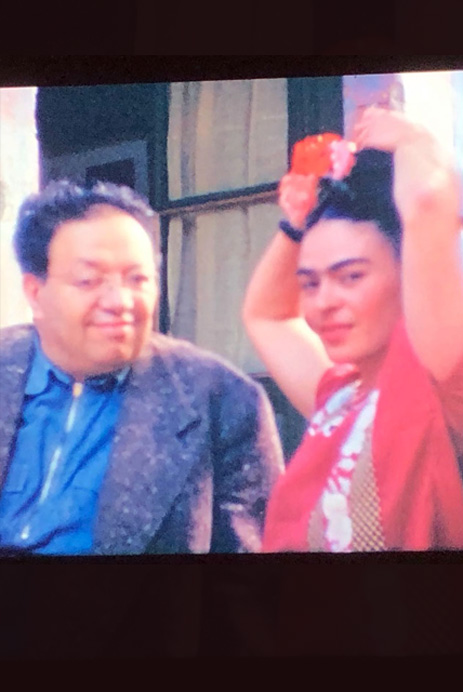
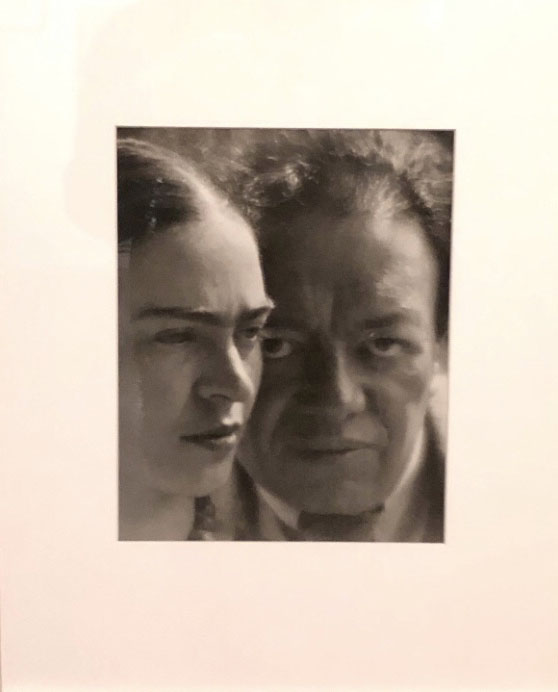
I have never seen a Frida Kahlo painting until I had the opportunity to attend the Frida & Diego: Love & Revolution exhibition at the AGSA. There are roughly 150 works from the Jacques and Natasha Gelman Collection showcasing some of Frida’s most iconic works. The show is especially successful because her work hangs side by side with Diego Rivera’s and affords the chance to be seen in the broader context of the Mexican Modernist movement. I will focus primarily on Frida’s work for the sake of this discussion.
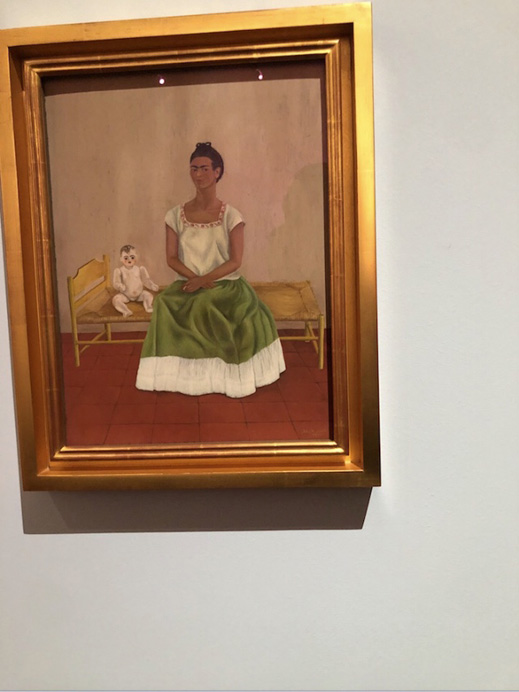
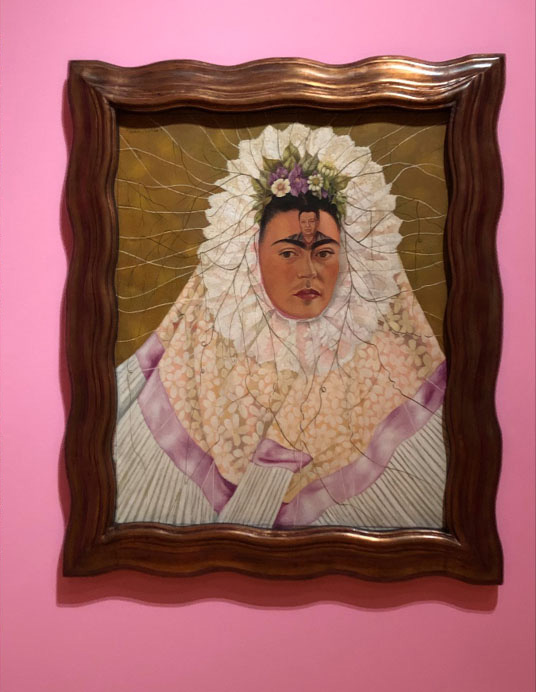
Her style appears to combine traditional representation with a kind of illustration in order to convey her vision. This hyper-representation enables a unique individualized form of Surrealism. But it is achieved in a way that appears both lucid and effortless. She combines autobiographical and cultural symbology in a unique synthesis that could be described as radical. Sometimes described as magical realism or new objectivity, contemporary artists and critics such as Andre Breton and Bertram D. Wolfe describe Kahlo’s work as individualized Surrealism. To me this challenge to compartmentalize her work reflects her individuality and independence from convention. Perhaps her style is best described as combining realism with surrealistic elements, folk art, violence and death.
Today Frida Kahlo is celebrated as an international artist but she is also seen as quintessentially Mexican. What are some of her influences?
Following the revolution, Mexicanidad rejected colonialist elitism with its European bias. Indigenous cultural traditions were Kahlo’s passion and inheritance and became critical subject material for her, along with her artist husband Diego Rivera. But Kahlo’s expression combines a unique individualised expression that is particularly poignant today because it also conveys triumph over adversity. Her tragic road accident at age eighteen meant for life long disability. Today we value diverse cultural groups more and more and historical figures such as Kahlo spearhead the achievement of not only women artists but also that of disability. Through her artistic vision she is able to confront stereotypes and change them in the eyes of future generations.
 scribblesdotbiz